

Timea Iancu | February 3, 2026
Posted in: Investment Management Trends, Investment Manager
10 Top Features to Look for in a Real Estate Investor Portal
Key takeaway: A real estate investor portal centralizes investor communication, portfolio visibility and reporting in one secure platform. These are essential capabilities for building investor confidence and nurturinging long-term relationships.
Raising capital and maintaining strong investor relationships has become increasingly complex for real estate investor relations teams. Growing investor demand for real-time transparency, fragmented reporting and manual onboarding workflows place added pressure. Without an investor portal to unify these processes, firms risk operational inefficiencies and lost credibility in a competitive market.
The real estate investor portal has emerged as a key collaborative tool that enhances the investment experience on both ends. It offers managers a centralized, simplified way to manage investor relationships, while giving investors instant access to portfolio data and performance visibility. This level of transparency is increasingly expected. According to a 2024 Preqin Global Investor Survey, 78% of institutional investors prioritize real-time data access when analyzing fund managers.
Here are the top 10 features investment managers should consider when selecting a portal, from interactive performance dashboards and reporting tools to customization options.
1. Comprehensive Portfolio Management
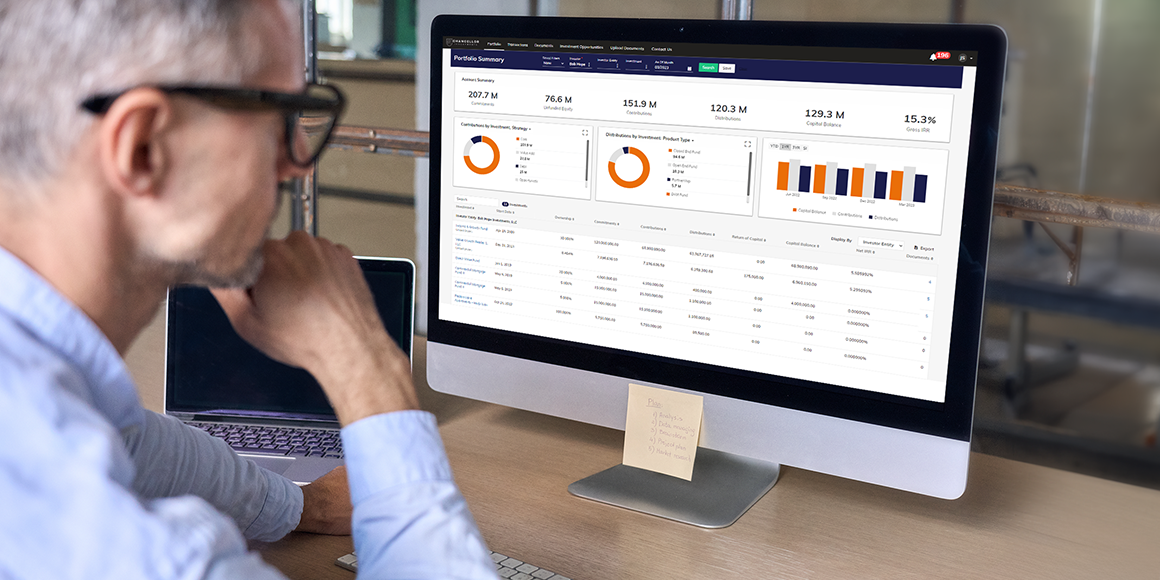
To foster investor trust and provide transparency, a real estate investor portal must provide interactive dashboards for portfolio management. These grant investors instant access to published performance metrics and financial details about their investments.
On top of periodic reports, continuous insight into investment performance enhances investor confidence in both the investment and the manager, nurturing solid, long-lasting relationships.
2. Document Management and E-Signature
Investor portals should provide a secure platform for uploading and storing vital documents in one centralized location. This eliminates the need for physical document distribution, reducing the risk of errors and expediting investor relations operations.
These portals also streamline onboarding by allowing investors to complete their profile information, the investor questionnaire and to sign the subscription agreement digitally.
3. Reporting and Analytics
As reporting plays a crucial role in investor relations, investor portals should feature comprehensive reporting tools. This helps investment managers improve reporting accuracy and reduce reporting cycles from weeks to just a few days.
Key functionalities for a real estate investor reporting software include:
- Generating reports with customizable templates
- Publishing reports directly on the portal or distributing them in bulk to contact lists
- Integrating with property management and accounting systems to eliminate data reconciliation.
4. Advanced Security Measures
One of the top priorities in investment management is secure communication and document sharing. Therefore, real estate investor portals should come with robust security features, including secure login protocols, multi-factor authentication, end-to-end encryption and compliance with international security standards to protect sensitive data.
5. Regulatory Compliance
Ensuring the investor portal adheres to legal requirements and industry standards is crucial to maintaining compliance. Real estate investor portal software features like controlled access to sensitive documents and detailed audit trails help streamline documentation and mitigate legal risk, fostering trust between investors and investment managers.
6. Integration with Other Tools
Integrating real estate investor portals with other business tools, such as CRM systems, accounting software or property management platforms, allows users to consolidate all their data and workflows into one connected system. This eliminates manual data transfers and provides a single source of truth for all investment-related data, reducing errors and enhancing efficiency.
7. Customization and Branding
The ability to personalize real estate investor portals with the company’s branding helps investment managers maintain a professional appearance and increase investor trust. Customization options can extend to adjusting the interface for different user types and managing access to investment metrics.
8. User-friendly Interface
An intuitive, easy-to-navigate interface ensures that all investors can utilize the portals regardless of their tech expertise. It helps users find key information effortlessly and fully leverage real estate investor portal software features. This also helps reduce the volume of questions and support inquiries investor relations teams receive from users who may struggle to navigate the platform.
9. Mobile Optimization
To meet the increasing need to manage investments on the go, offering a mobile-optimized investor portal is essential. This functionality significantly boosts the platform’s usability and accessibility, ensuring investors have access to their portfolios anytime and anywhere.
10. Scalability
An investor portal should be able to grow and adapt with your business and meet your evolving needs. Portals should be able to seamlessly accommodate an increasing number of users and data, ensuring smooth operations as organizations expand.
Enhance Investor Relations with Real Estate Investor Portals
Yardi Investment Suite is a comprehensive platform dedicated to streamlining investor relations with a built-in investor portal. Key features include:
- Customizable investor portal – Managers can personalize the portal with their branding, adjust the interface for different user types and manage access to investment metrics.
- Interactive performance dashboard – The main dashboard provides investors with a real-time overview of their portfolio performance.
- Centralized document hub – The investor portal serves as a document management hub, allowing users to securely store, access and track essential documents.
- Automated onboarding – Investors can subscribe to a new opportunity and complete the entire onboarding workflow, including signing the agreement without leaving the portal.
- Integrated solutions – Yardi Investment Suite seamlessly integrates with Yardi Voyager and Breeze Premier, simplifying and accelerating investor reporting.
ROCO Management, a full-service real estate investment and management company replaced PDF reports and manual calculations by automating its reporting process with Investment Manager. This change reduced quarterly reporting time from two weeks to just three to four days, saving around 80 hours of work each year.
Conclusions
As investor expectations rise and capital markets become more competitive, real estate firms must rethink how they manage investor relationships. Adopting a modern real estate investor portal is a strategic step toward greater transparency, operational efficiency and long-term growth.
Curious how an investor portal can support your business? Watch a quick webinar on Investment Manager to see it in action.
FAQs
The most important real estate investor portal software features address visibility, communication and security. The Yardi Investment Suite investor portal includes interactive performance dashboards, centralized document sharing, configurable report generation tools and advanced security protocols. Other essential features include automated onboarding workflows and integration with Yardi property management systems.
Investor portals improve investor confidence and transparency by providing self-service access to real-time portfolio data. The Yardi investor portal gives investors direct visibility into performance metrics, documents, reports, capital calls and distributions. A branded, user-friendly interface ensures a consistent, professional investor experience.
A real estate investor portal with a dedicated opportunities dashboard allows investors to subscribe to new opportunities with just a few clicks. The Yardi Investment Suite portal allows investors to complete onboarding steps without leaving the platform. This includes entering profiles, contact and banking details, completing KYC/AML questionnaires and digitally signing subscription agreements.
Through an investor portal, such as Yardi Investment Suite’s portal, investors can view real-time metrics such as capital contributions, returned and unreturned capital, distributions and the internal rate of return (IRR) for each of their investments. They can also access fund-level performance details, including net asset value (NAV), IRR, equity multiple and time-weighted return (TWR).
Investor portals reduce reporting timelines by centralizing the reporting cycle and automating key workflows. Yardi real estate investor reporting software enables report generation using customizable templates, allows managers to publish reports directly on the portal or distribute them in bulk to specific investor groups and tracks investor engagement for compliance purposes.
Investor portals must prioritize data security and secure login protocols to protect users and their information. Yardi Investment Suite’s portal ensures secure investor access with multi-factor authentication and protects investment data with advanced encryption and secure login protocols.
To choose the right investor portal, real estate investment managers should assess their reporting complexity, investor base size, compliance with requirements and growth plans. It’s also important to attend product demos, discuss with sales representatives, compare viable options with internal stakeholders and select the platform that best aligns with long-term business needs.

Similar Articles


