


Timea Iancu | November 5, 2025
Posted in: Investment Management Trends, Investment Manager
How to Simplify Real Estate Investor Reporting
Real estate investor reporting has become more complex as investor expectations have evolved. Until a few years ago, investors relied on periodic, limited updates on their capital performance. The pandemic period has shifted this mindset, with investors now expecting greater transparency, accuracy and timely access to information. This has pushed investment managers to find ways to simplify reporting without compromising quality.
This guide explores the main challenges and practical solutions in modern real estate investor reporting, providing fund managers with actionable strategies to meet evolving investor expectations.
What Is Real Estate Investor Reporting?
Real estate investor reporting is the ongoing process of providing investors with consistent updates on the performance of their investments. Regular, transparent reporting is essential to strengthen relationships with your investors, ensure regulatory compliance and support successful capital raising initiatives.
The most relevant reports for real estate investors typically focus on fund performance, financial metrics and investor returns, including:
- Quarterly Investor Reports – Provide updates on fund and property performance each quarter, covering financial metrics, portfolio insights and asset management initiatives.
- Financial Statements – Prepared quarterly or annually, these are standardized accounting reports (income statements, balance sheets, cash flow statements) at the fund or entity level, supporting compliance and granular financial visibility.
- Tax Reporting Documents – Essential for tax compliance, these are usually sent once per year during tax season and detail each investor’s share of taxable income, losses, deductions and credits.
- Distribution Notices – Inform investors about their cash distributions each time a distribution occurs, providing insights into the distribution amount, source and post-distribution balance.
- Capital Account Statements – Sent on a quarterly or annual basis, they show each investor’s position within a fund, including beginning balance, contributions, distributions, allocations and ending balance.
| REPORT TYPE | PURPOSE | FREQUENCE |
|---|---|---|
| Quarterly Reports | Updates on fund and property performance for investor visibility | Quarterly |
| Financial Statements | Standardized accounting reports for compliance and financial transparency | Quarterly or annually |
| Tax Reporting Documents | Mandatory for tax compliance | Once per tax year |
| Distribution Notices | Informing investors about each distribution | Each time a distribution occurs |
| Capital Account Statements | Showing the investor’s position within a fund | Quarterly or annually |
What Are the Latest Trends in Real Estate Investor Reporting?
As real estate market dynamics have changed significantly in recent years, with uncertainty and volatility on the rise, investor expectations have evolved as well. Consistent, structured reporting is no longer just a compliance necessity but also a strategic advantage for building trust and supporting your capital raising efforts.
The most prominent trends in real estate investor reporting to keep an eye on include:
- Real-Time Data Access – Investors are no longer satisfied with quarterly or annual updates alone, but want continuous insight into their portfolio performance. Fund managers offering digital, self-service access to investment data, documents and reports stand out by ensuring transparency and fostering investor confidence.
- Interactive Dashboards – Having an investor portal gives you a definite competitive advantage. Modern investors expect customized, interactive dashboards with performance metrics, helping them visualize results and make informed decisions.
- Personalized Communication – The time of one-size-fits-all reporting is over. Leading investment managers now create tailored report templates to accommodate different investor types, delivering only the insights relevant to their commitments and interests.
- Enhanced ESG Reporting – With growing attention to long-term value and responsible capital allocation, investors now expect transparency around sustainability initiatives. Therefore, integrating ESG (Environmental, Social and Governance) metrics into reports is becoming a standard practice.
What Reporting Challenges Hold Back Investment Teams?
In today’s competitive investment landscape, fund managers and investor relations teams face growing pressure to meet evolving investor expectations. However, several reporting challenges continue to constrain efficiency and visibility, such as:
- Fragmented Data Sources – Reporting becomes cumbersome when you need to manually reconcile data from multiple systems. Disconnected environments for accounting, property management and CRM data lead to delays, inconsistencies and errors that undermine reporting accuracy.
- Compliance and Audit Risks – Without a standardized and centralized reporting process and proper KYC/AML verification during investor onboarding, it’s challenging for you to monitor and verify data accuracy. Gaps in compliance at this stage can carry over into reporting, creating audit risks that can impact both your reputation and legal standing.
- Disconnected Tools – When your reporting workflows are scattered across spreadsheets, email threads and PDFs, errors and omissions are almost inevitable. Without proper integration between these tools, your teams end up spending excessive time and effort, making it hard to scale the process efficiently.
- Slow Response Time – If investor inquiries require digging through multiple systems or coordination across several teams, response time suffers. Investors expect timely updates and answers, and without a centralized data source, meeting those expectations becomes a constant challenge for your team.
How Can Investment Managers Simplify Reporting Workflows?
Investment managers can take advantage of a wide range of technology solutions to streamline fund operations and reporting. Modern real estate investor reporting software helps your team to:
- Centralize Data and Reporting Workflows – Leveraging a single platform to handle the entire reporting cycle is a major step toward efficiency. Dedicated real estate investor reporting tools enable you to store property data and performance metrics, compile reports and distribute them to investors, all in one place.
- Automate Report Generation and Distribution – Manual data reconciliation and report creation are quickly becoming obsolete. Modern real estate reporting automation allows you to instantly generate reports from customizable templates that pull real-time data directly from the accounting systems. Many solutions also support bulk distribution and even track investor engagement with the shared documents.
- Enhance Transparency with an Investor Portal – As more investors prefer self-service access to performance data, adopting an investor portal is a game-changer. It helps you enhance communication and transparency on both ends, turning reports from one-off updates into structured, ongoing sources of insight.
- Ensure Consistent Reporting – Modern investors value consistency — receiving updates on a regular schedule, in a clear, standardized format and with all key metrics included. A dedicated real estate investor reporting software makes it easy to create branded templates, incorporate visuals and tailor communication for different investor groups.
- Integrate Investor Relations and Accounting Systems – Connecting your investor relations platform with accounting systems is essential to ensure a seamless, accurate and fast reporting process. With integrated data, every report reflects up-to-date information, reducing reporting cycles from weeks to days.
How Yardi Investment Manager Helps
Yardi Investment Manager is a real estate investor relations platform designed to help you automate reporting, capital raising and investor communications. The tool simplifies the process through:
- Self-Service Access – Allowing investors to access published performance metrics, documents and reports at any time through a branded, secure portal.
- Simplified Reporting – Enabling you to generate reports using pre-built or custom templates and distribute them in bulk to specific contact lists.
- Centralized Data – Helping you respond faster to investor inquiries by centralizing all investment data in one place.
- Activity Tracking – Integrating with Microsoft Outlook to track all email communication within the reporting platform
- System Integration – Connecting with Yardi Investment Accounting and property management systems to eliminate manual data transfer and reconciliation.
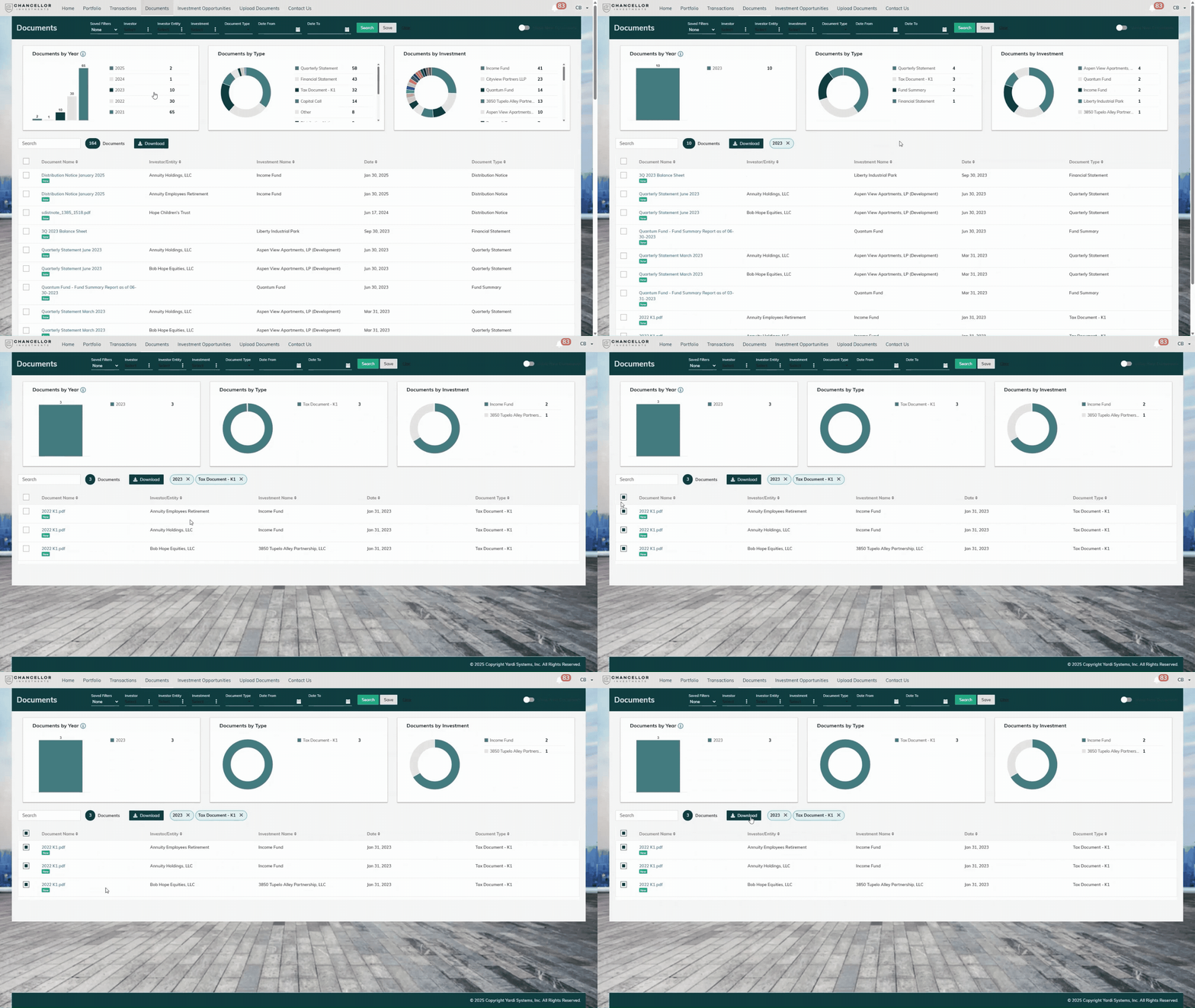
Want to See Yardi Investment Manager in Action? Watch the On-Demand Webinar to Learn More.
Users of Yardi Investment Manager confirm that the real estate investor reporting software has helped them reduce reporting cycles from weeks to a few days and scale the process across an investor base five times larger without adding staff.
We would be working on aspects of investor reporting for pretty much the entire two weeks at the beginning of the month. With Investment Manager automating processes for us, it takes about three or four days now.
Christie Parker, CFO, ROCO Management
Conclusion
Efficient, simplified reporting is now more than an operational advantage. By embracing modern, technology-driven reporting practices, you can build lasting investor confidence and gain a clear edge in an increasingly competitive market.
FAQs
A real estate investor report should include all relevant investment performance data for that specific report type and audience. Typically, real estate investor reporting covers financial statements, return metrics, portfolio updates, business highlights, property-level details, compliance information and forward-looking projections.
Most real estate investment managers report to investors on a monthly or quarterly basis, with additional annual reports for a broader perspective. The ideal reporting frequency depends on the fund’s structure, size and investor expectations, but maintaining consistency is key to effective real estate investor reporting.
The most common types of reports in real estate investment include quarterly or monthly performance reports, annual summaries, financial statements and tax reporting documents, such as K-1s. Some investment managers also share property performance updates or ESG (Environmental, Social and Governance) reports to enhance transparency.
Real estate investor reporting software and automation tools simplify the process by centralizing investment data, automating report generation and distribution and offering investors self-service access to real-time performance data. Modern tools can also integrate with accounting and property management systems to eliminate manual data transfers and reconciliation.
Investor portals have become essential for real estate investor reporting to satisfy modern investors’ expectations for enhanced transparency and convenience. Through a dedicated portal, investors can securely access investment metrics, documents and reports, find answers to inquiries and collaborate more efficiently. These real estate investor reporting tools enhance trust and streamline communication between investors and managers.

Similar Articles


