


Joel Nelson | August 8, 2023
Posted in: Art Of The Covenant
Art of the Covenant: Best Practices for Minimising CRE Borrowing Risk
Covenants – agreements between a debtor (borrower) and creditor, or lender, are a staple of commercial real estate loans. They’re designed to reduce risk for lenders. Furthermore, loan covenants commit the borrower to execute certain behaviours, such as making capital and interest payments when due. And avoid others, such as selling the assets that underpin the loan without first repaying it in full.

Certain economic conditions – falling portfolio values, high operational expenses, rising vacancy rates – increase the risk of violating, or breaching, a loan covenant, by being late on payments, reporting or by failing to meet financial benchmarks.
One example of a covenant breach is a CFO missing a debt service ratio, which measures the cash flow available to pay current debt obligations. Furthermore, this could result in the lender “calling the loan”, forcing the company to obtain financing to repay the loan.
Avoiding such a scenario requires transparency in lender requirements and a deep understanding of the factors that influence debt, such as forecasts and rents. “Covenant tracking is a big trend now. On the borrower side, the emphasis is on transparency and getting insight into debt portfolios,” observes Chris Barbier, senior manager of investment management for Yardi.
How can borrowers minimise risk and maximise efficiency in managing their loan covenants? One of the most reliable ways involves using one technology platform rather than multiple systems for loan, asset management and investment activities.
“If you’ve got an operating property – which is usually the collateral for the loan in a system – and then you’ve got loans being tracked somewhere else, the two processes are not aligned. A tightly connected solution allows for better transparency and risk management.”
Chris Barbier, Senior Manager of Investment Management, Yardi
Utilise a single real estate platform to minimise borrower risk
A single technology system that centralises all loan information and automates processes helps borrowers by:
- Ensuring deliverables are sent to lenders
- Monitoring the compliance status of key covenants
- Tracking and accounting for different types of loans
- Tracking changes in loan terms over time and their impact on the amortisation schedule
- Providing full visibility into asset operational performance such as loss of income and deterioration in asset values, making it easier to anticipate and deal with potential problems
- Reducing manual errors by eliminating spreadsheets
- Providing full visibility and an audit trail into payment history
Most importantly, such a system provides a single source of truth. “That means transparency from the investment to how the loan, and underlying collateral, are performing,” Barbier says.
Learn how Yardi Debt Manager enables tracking and accounting for a loan portfolio and provides visibility into debt obligations with the underlying operating assets.

Recent Posts
Similar Articles

Yardi x AREF: Exploring the Role of Data and Technology in Investment Decisions
Yardi partners with AREF on a new report, exploring how data and technology are influencing investment decision-making in real estate – take the survey now!

Effective Capital Raising Strategies for Real Estate Investment in 2025
Understanding real estate capital raising in today’s environment is key to unlocking long-term growth opportunities. We explore key strategies for successfully raising capital for real estate investments in 2025.
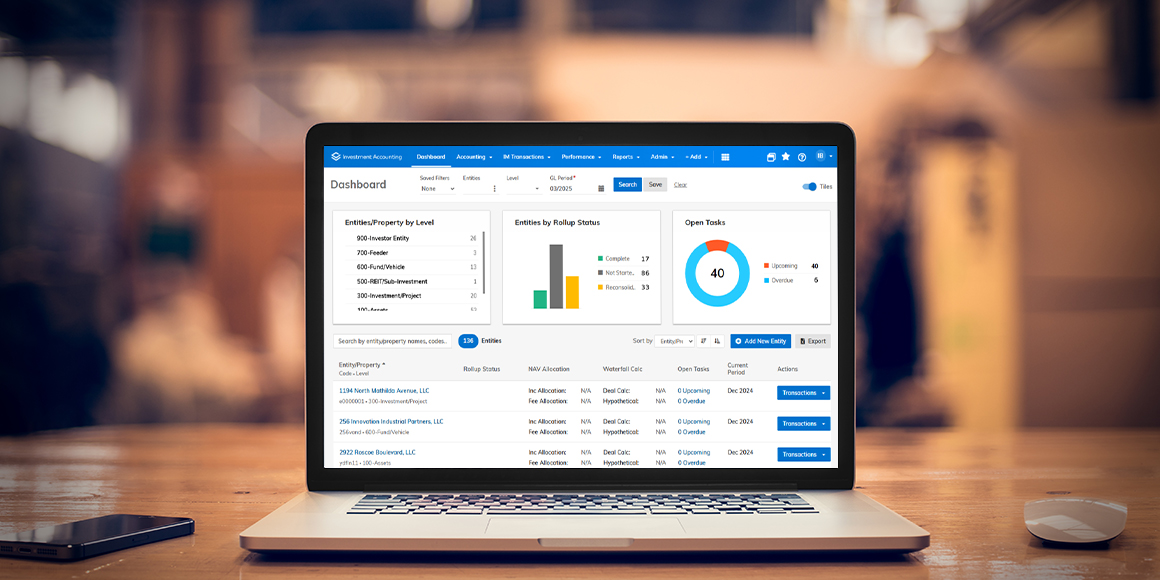
Top 6 Features Real Estate Investment Accounting Software Should Have
To maximise the benefits of investment accounting software, we explore the six essential features that real estate professionals should look for.

Simplify KYC/AML Compliance with Investment Manager
See how Yardi Investment Manager expands its functionality to capture, manage, and store all required investor data within the same platform.